ColorNest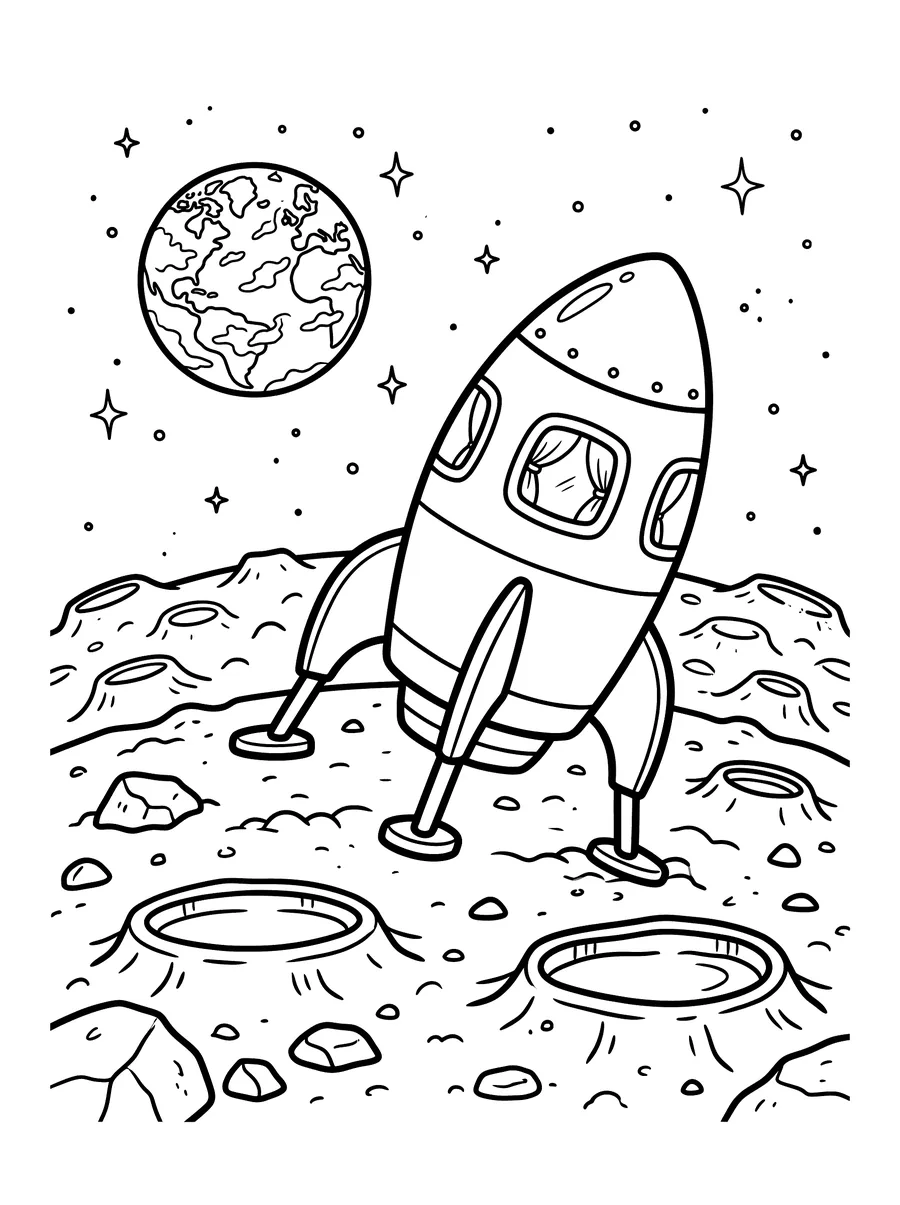
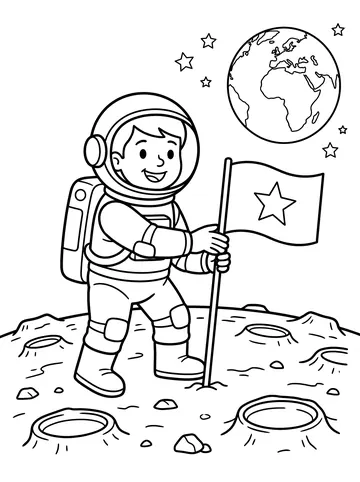
Landing a spacecraft on the Moon requires extraordinary precision because the Moon has no atmosphere to slow the vehicle with a parachute — the rocket must fire its engines in exactly the right way to brake to a gentle stop. NASA's Apollo missions first landed astronauts on the Moon in July 1969, and since then robotic landers have continued to explore its surface. The Moon's surface is covered in powdery gray regolith created by billions of years of meteorite impacts.
Coloring ideas: color the rocket white or silver with colored fins. The moon surface is a pale gray with slightly darker gray inside each crater. Earth in the sky looks beautiful in deep blue and green. Stars can be small white dots scattered across a dark sky.
Kids can draw an astronaut stepping out of the rocket hatch, or add a flag planted beside it. Older kids can add the shadow the rocket would cast under the sun's light on the airless moon.