ColorNest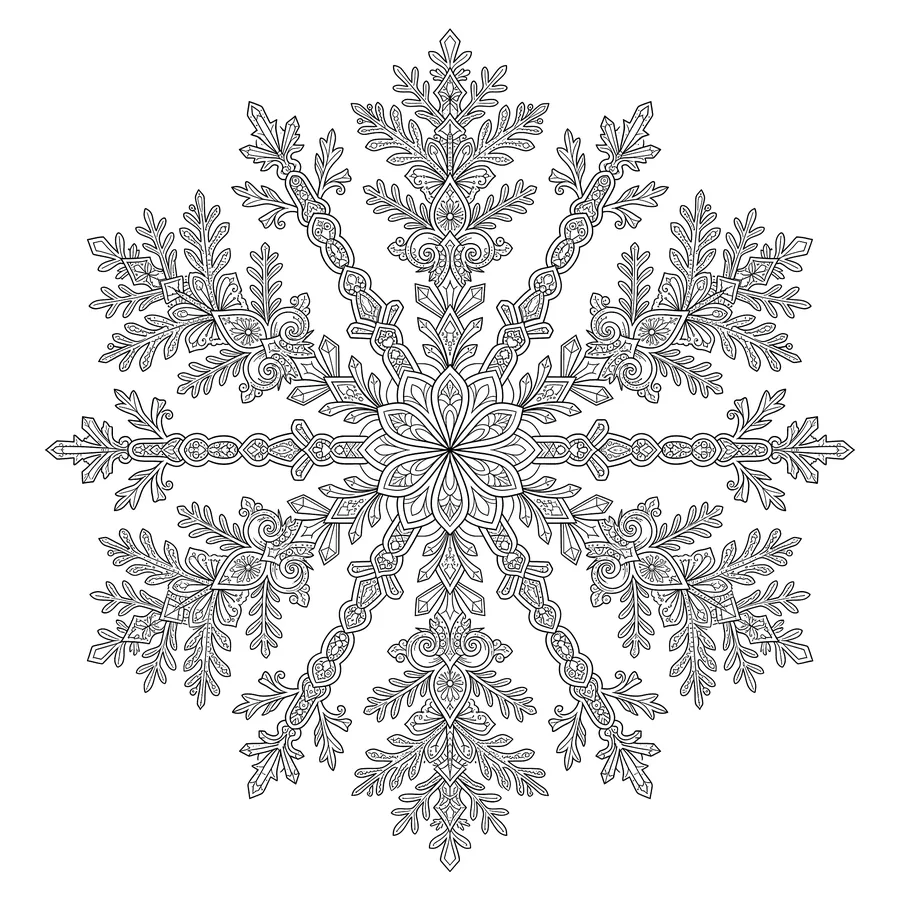
No two snowflakes are identical — the number of possible arrangements of water molecules in a snowflake is so astronomically large that the probability of two being exactly the same is essentially zero. All snowflakes have six-fold symmetry because water molecules form hexagonal bonds when they freeze. A single snowflake is made up of between 10 and 100 quintillion water molecules. The largest snowflakes ever recorded fell in Fort Keogh, Montana in 1887 — witnesses reported them to be 38 cm (15 inches) wide, though this claim cannot be scientifically verified today.
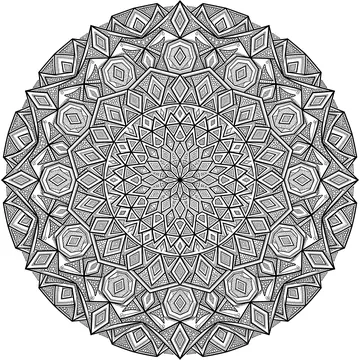
Coloring ideas: ice blue, silver, and white are the classic snowflake colors, but consider a midnight navy background effect by coloring all sections in deep blue and leaving the finest sub-branches white. Alternatively, give each of the six arms a subtly different blue — from pale sky blue to deep cobalt — to create a gradient effect rotating around the circle. The central six-petal flower looks striking in bright white or icy lavender.
Silver or white gel pens can add a beautiful frosted highlight to the crystal tips and diamond accents after coloring the rest in blue. Work one arm at a time, mirror-checking the opposite arm to keep the colors consistent.