ColorNest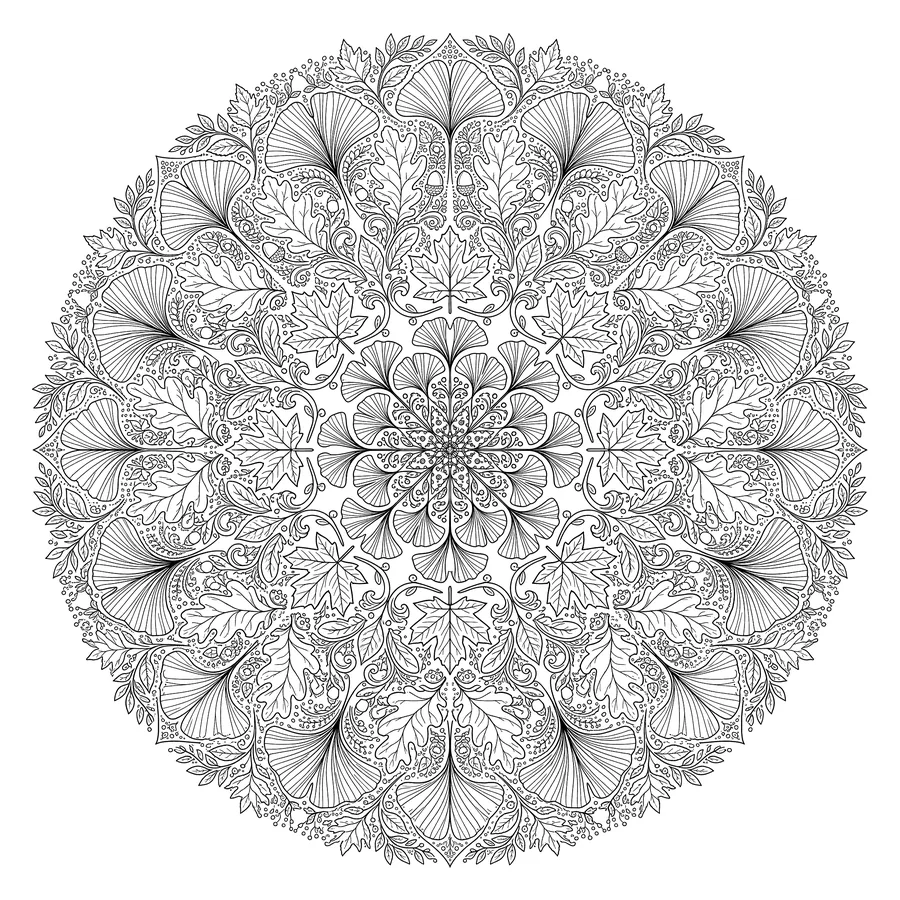
Autumn leaf color is caused by the breakdown of chlorophyll as days shorten and temperatures drop. The green chlorophyll that dominates leaves in summer breaks down first, revealing yellow and orange pigments (carotenoids) that were present all along but masked. The brilliant reds are actually new — produced by anthocyanin pigments created from sugars trapped in the leaf as the tree seals itself off. Ginkgo trees, one of the leaf shapes in this mandala, are often called 'living fossils' because they have remained virtually unchanged for over 200 million years and survived mass extinction events that wiped out far younger species.
Coloring ideas: autumn palettes are among the most satisfying to work with. Try scarlet and crimson for the maple leaves, russet and amber for the oak leaves, and clear lemon yellow for the ginkgo fans. Color the acorns in warm brown with tan caps. Alternate the leaf colors around the circle to bring out the rotational symmetry.
This mandala is a great candidate for a 'warm season' approach — use only reds, oranges, golds, and deep browns with no cool colors at all. The effect mimics a forest floor scattered with fallen leaves and rewards a bold, saturated color choice.