ColorNest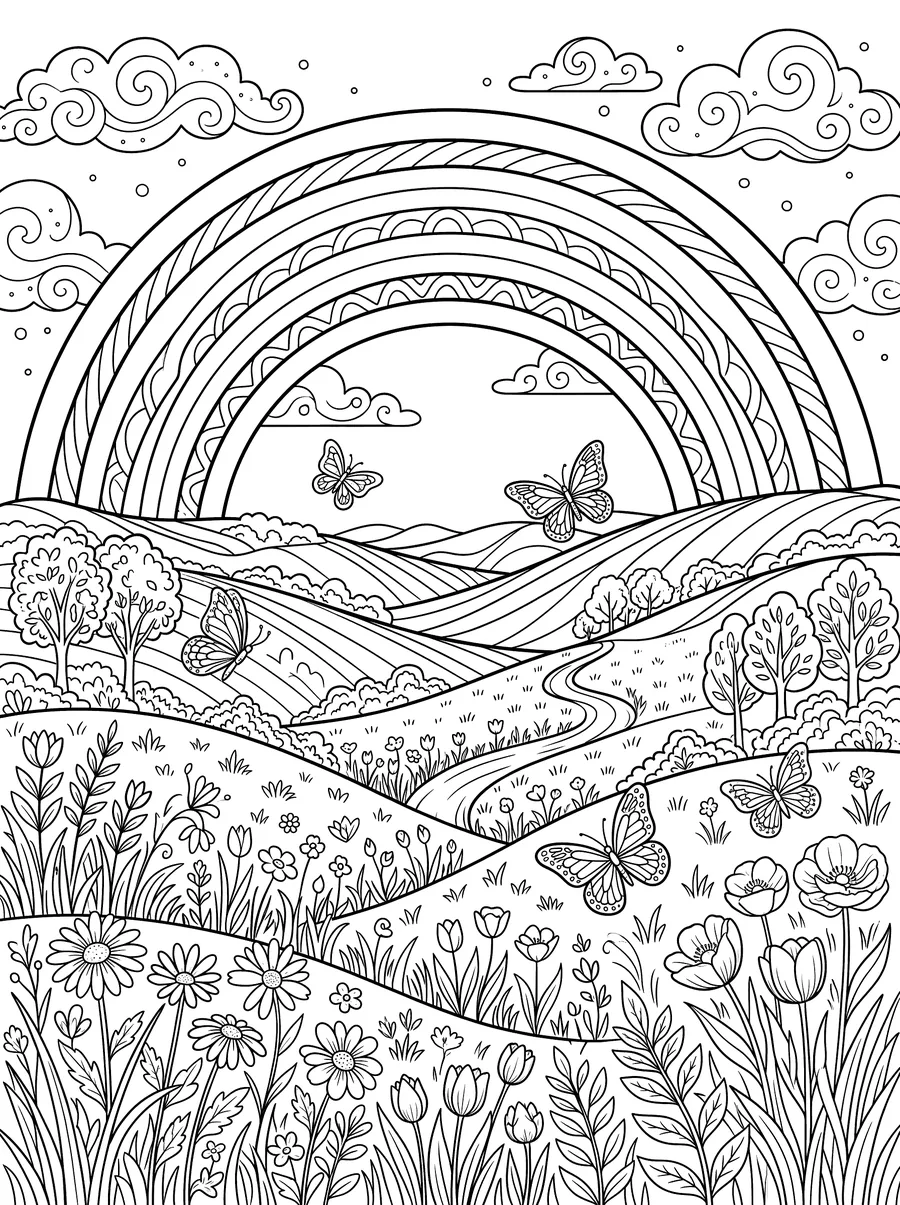
Rainbows form when sunlight enters water droplets in the air and is bent (refracted) and reflected back out at different angles for each color. Red always appears on the outer edge, followed by orange, yellow, green, blue, indigo, and violet — this order never changes because each color has a different wavelength. A full rainbow is actually a complete circle; we usually see only the arc because the ground blocks the lower half. On rare occasions after a heavy rain you can spot a secondary, fainter rainbow outside the first one with the colors reversed.
Coloring ideas: follow the real rainbow order for the seven bands — red, orange, yellow, green, blue, indigo, violet — from outer to inner. Color the hills in layered greens that get lighter toward the background, and give the wildflowers bright mixed colors: yellow daisies, red poppies, pink tulips. The swirling clouds look great in soft lavender or peachy pink.
For a fun challenge, color the butterflies in colors that match the rainbow band they are flying near. This page has lots of small details in the foreground flowers, so older kids can use fine-tipped colored pencils for the best result.