ColorNest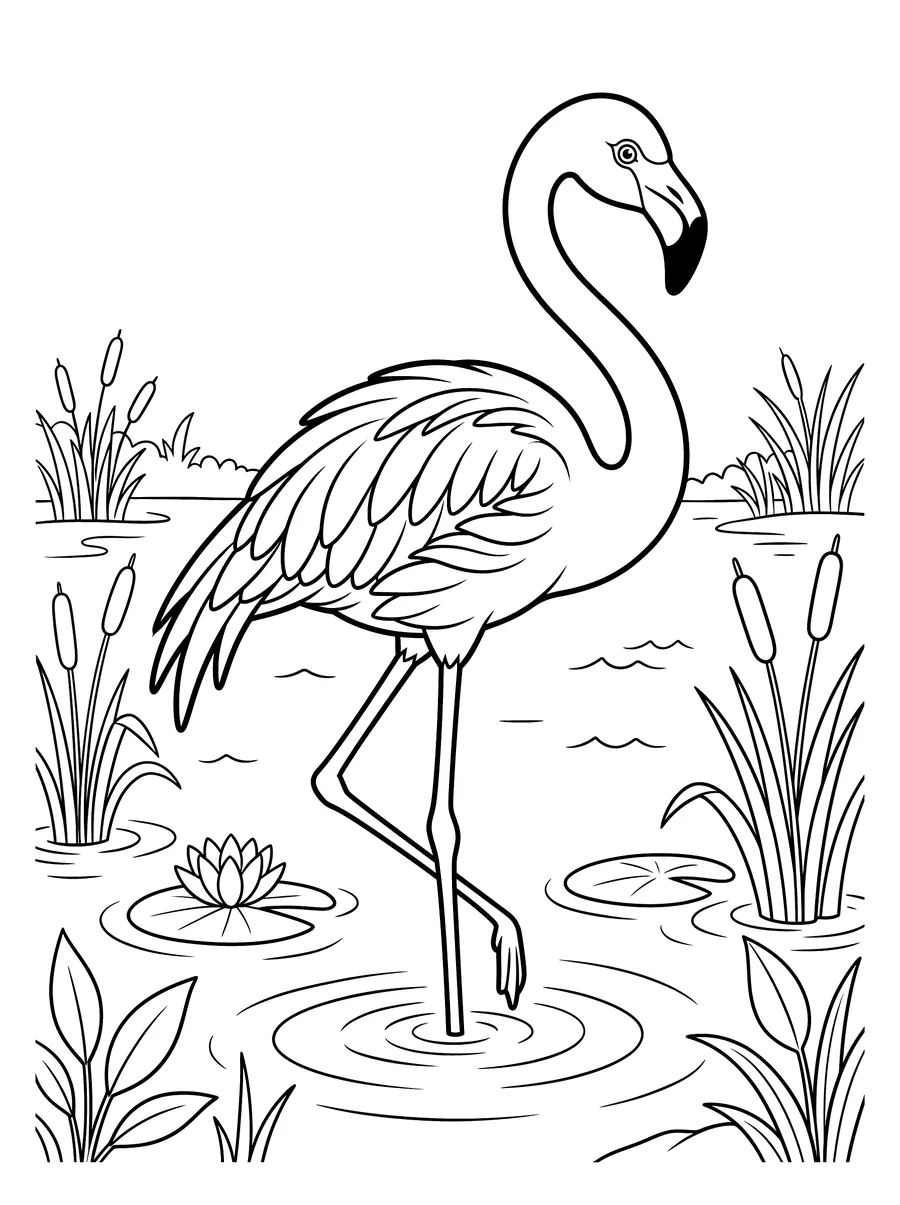
Flamingos get their famous pink color from the food they eat — tiny shrimp and algae that contain natural pink and orange pigments called carotenoids. Baby flamingos are born white or gray and only turn pink as they grow and start eating their adult diet. Flamingos often stand on one leg, which scientists believe helps them conserve body heat. There are six species of flamingo worldwide, and they can be found on every continent except Australia and Antarctica.
Coloring ideas: color the flamingo's body and neck a warm salmon pink, with the wingtips and some feather edges a deeper rose or coral. The legs are a pale pink. The beak is pink with a black tip. The water can be a calm light blue or aqua. The cattails are dark brown at the top and green on the stems.
Kids can practice blending two shades of pink on the body — lighter on the belly and darker on the wings — for a rounded, three-dimensional look. Younger children can enjoy filling in the graceful S-curve of the flamingo's long neck.