ColorNest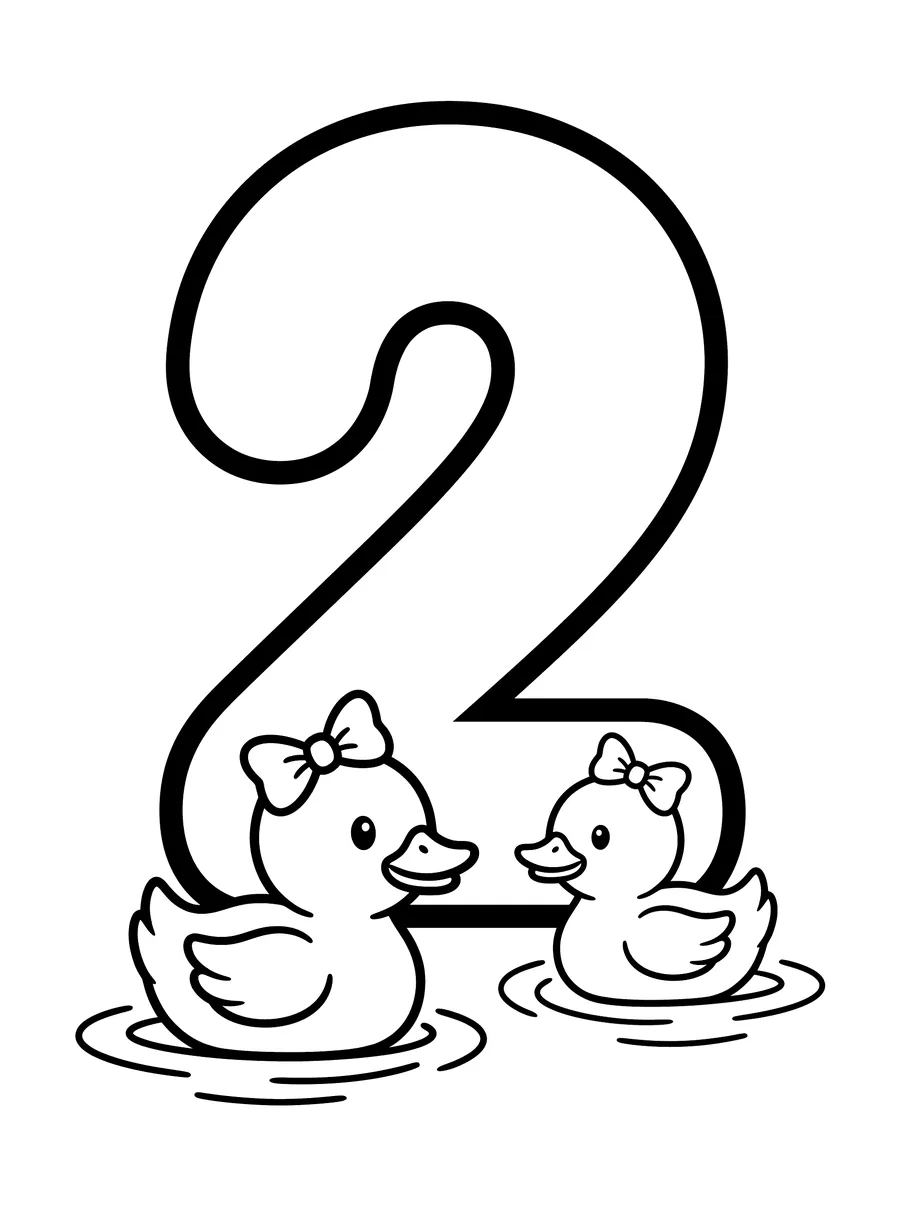
The number two is the first even number and the only even prime number. Pairs and twos appear everywhere in nature — most animals have two eyes, two ears, and bilateral symmetry (the left and right sides mirror each other). Ducks belong to the waterfowl family Anatidae and are found on every continent except Antarctica. Ducks have waterproof feathers thanks to an oil gland near their tail that they spread over their feathers with their beak — a process called preening. When ducks paddle in the water, their webbed feet act like paddles, pushing against the water on the back stroke to propel them forward.
Coloring ideas: color the number 2 in a cheerful yellow or soft lavender. Give each duck a bright yellow body with an orange beak and feet. Make their bows different colors — one pink and one blue — to tell the two ducks apart. Add light blue wavy lines beneath them for the water.
Point to the number and say 'Two!' then count the ducks: 'One duck, two ducks — two!' Have toddlers hold up two fingers while counting. This multi-sensory activity (seeing, saying, and feeling the number) helps the concept of 'two' stick. Ask: 'Can you find two of something else in the room?'