ColorNest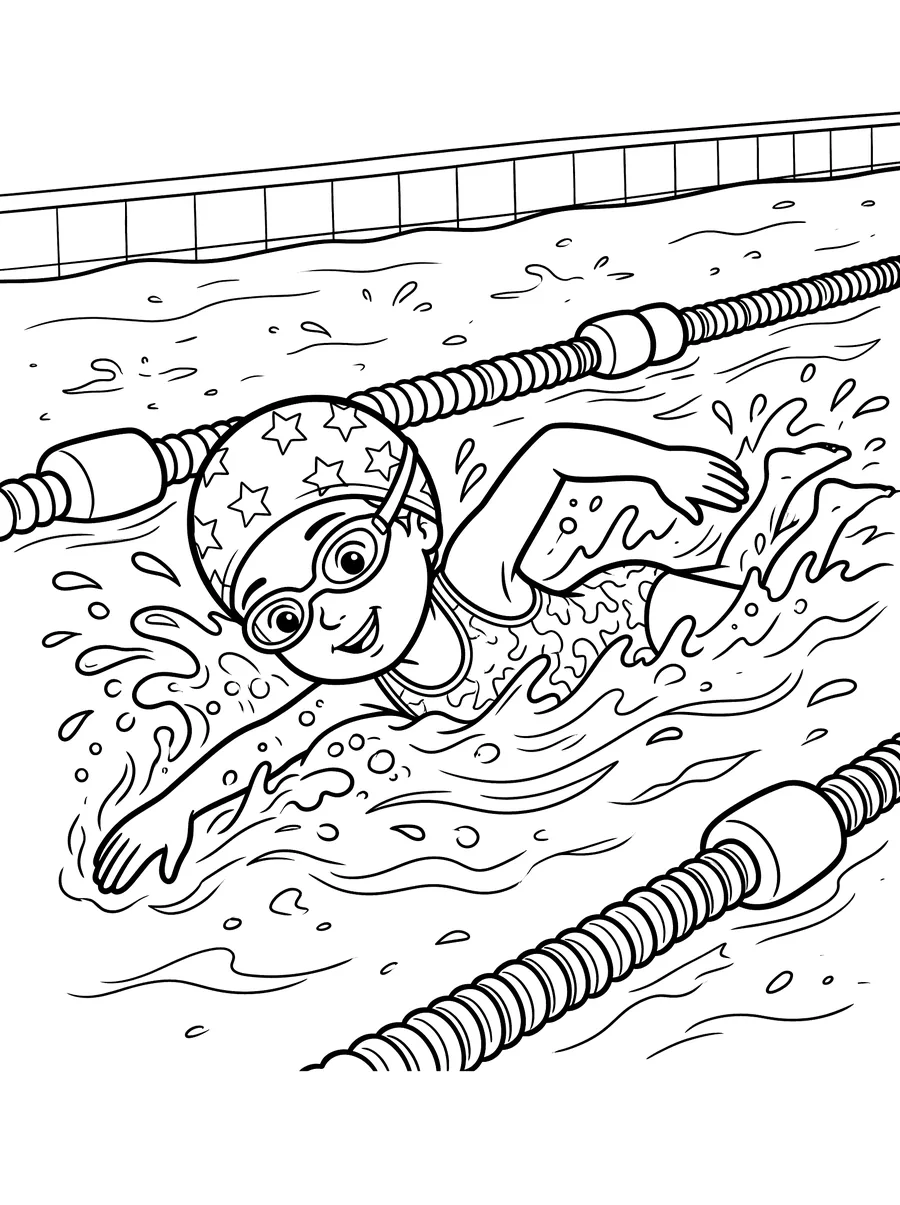
Swimming is one of the few exercises that works almost every muscle group in the body simultaneously. Competitive swimming became part of the modern Olympic Games when they were revived in 1896, making it one of the oldest Olympic sports. Competitive lanes in a standard Olympic pool are 50 meters long, and swimmers turn at the wall using a flip turn — pushing off the wall with their feet while turning 180 degrees underwater. The lane divider ropes shown in this picture serve two purposes: they mark each swimmer's lane and their floats disrupt the waves created by other swimmers, reducing interference.
Coloring ideas: give the swim cap a bright color — red, blue, or teal — and color the stars a contrasting white or yellow. Make the goggles dark grey or mirrored black. Color the water in wavy shades of blue and aqua, and give the lane ropes alternating color sections — typically red near the lane ends and blue or orange in the middle.
For young swimmers, point out the flip turn technique: ask them to find a video online showing how swimmers spin and push off the wall. Coloring the water's wave pattern by layering light and medium blue is a great way to learn about blending two close shades.